Not all guts start the same. Explore how Bifidobacteria and 2’-FL HMOs team up to nourish the microbiome and create a healthier foundation for life.
Content Outline
-
Scenario 1 – Good or adequate Bifidobacteria: 2’FL maintains the load
-
Scenario 2 – Okay, but not good enough Bifidobacteria abundance: Use 2’FL as a booster
-
Scenario 3 – Low to almost no Bifidobacteria: 2’FL alone may not be enough
The gut microbiome is increasingly being recognised as a key contributor to your overall health, immunity, metabolism, and gut barrier integrity. Within this unique ecosystem, Bifidobacteria have long been associated with protective benefits and are one of the first colonizers of the infant gut. To help boost their abundance and ensure they thrive, human milk oligosaccharides, such as 2’-Fucosyllactose (2’-FL), serve as a microbial feast for beneficial microbes like Bifidobacteria.
Yet, emerging research shows that how effectively 2’-FL seeds and feeds your gut microbiota depends heavily on whether the “right” microbes are present in the gut in the first place [1].
Here, we explore three scenarios where Bifidobacteria are present in good numbers (so 2’-FL helps maintain the load); where they are present but sub-optimally (so 2’-FL serves to boost them); and where they are very low or absent (so 2’-FL alone may be insufficient — you need to seed first) [2].
Why are Bifidobacteria so important?
Bifidobacteria are one of the early colonizers of the human infant gut, and their importance extends far beyond early life [3]. They are particularly vital for fermenting non-digestible carbohydrates into short-chain fatty acids (SCFAs), which help keep gut pH low, inhibit pathogenic growth, support gut barrier integrity, and support the immune system.
Some of the vital roles that Bifidobacteria are involved in include:

-
Digestion - Bifidobacteria are able to break down important components in the diet, particularly nondigestible carbohydrates, which we are ill-equipped to do ourselves [4]. Breaking down complex carbohydrates, like dietary fiber [5], which supplies vital energy, supports your digestive system, helps maintain a healthy heart, and controls blood sugar, and transforming them into key metabolites like SCFAs is one of the key functions of these beneficial microbes.
-
Immune system - Bifidobacteria are integral to immunity because they help to initiate and develop the early gut microbiome, modulating both the innate and adaptive immune systems, and producing important metabolites [6].
-
Gut barrier lining - Bifidobacteria strengthen the gut barrier, known as the gatekeeper of the gut. It increases protein expression to keep the intestinal cells together, produces antimicrobial compounds to keep potential invaders out, and has anti-inflammatory properties.
-
Gut-brain axis - Some research shows Bifidobacteria have a role in maintaining the gut-brain axis, helping to regulate mood and maintain your mental wellbeing [7].
HMOs and 2’-FL: Selective fuel for Bifidobacteria
2’-Fucosyllactose (2’-FL) is one of the most abundant human milk oligosaccharides (HMOs) in human milk [8] and is increasingly being added to infant formula and food supplements because of its benefits for both gut and general health. 2’-FL is made up of a fucose unit attached to lactose and travels through the digestive system relatively untouched until it reaches the colon, where HMO specialists, like Bifidobacteria, get to work to break it down.
Much research has demonstrated that 2’-FL supports the growth and activity of Bifidobacteria. In infants fed formula milk, adding 2’-FL to formula containing 4g/l of GOS and FOS resulted in microbial growth similar to exclusively breastfed infants, and had a stronger bifidogenic effect compared to formula that did not contain the HMO [9]. Even trials involving adult subjects have found that introducing 2’-FL into the diet has both bifidogenic and butyrogenic effects [10].
Overall, HMOs are considered a selective fuel for Bifidobacterium, and this selective promotion in the gut is a key factor in the predominance of this bacterial genus, particularly in breastfed infants.
What are HMO responders?
HMO responders is a term that refers to a particular microbe, typically a Bifidobacteria strain, that has the tools to break down HMOs, like 2’-FL. Properties like transporters, glycosidases, and the ability to cross-feed other beneficial microbes make Bifidobacteria strains HMO responders. There are also differences between strains, which can make some better HMO responders than others. For example, B. infantis has an extensive repertoire of HMO utilization genes compared to B. longum subsp. longum, which has a more limited set [11].
Not all guts are the same: 3 Bifidobacteria scenarios
Although 2’-FL is a powerful prebiotic that supports gut health in numerous ways, especially by feeding Bifidobacteria, not everyone starts with the same microbial foundation. Differences in birth method, feeding type, antibiotic exposure, and lifestyle choices can affect Bifidobacteria levels and, indeed, how well 2’FL can work in the gut.
Understanding an individual’s baseline Bifidobacteria levels is critical for deciding whether to seed the gut with HMO-responsive strains, feed the beneficial bacteria already present, or combine both approaches for optimal results. This leads us to three common gut scenarios:
|
Bifidobacteria baseline |
Strategy |
Expected outcome |
|---|---|---|
|
Good |
HMO (2’-FL) only – maintenance |
Stable Bifidobacteria dominance, reduced drift |
|
Okay |
HMO (2’-FL) – boosting |
Increase in Bifidobacteria abundance, improved metrics |
|
Low to nearly absent |
Seed (HMO-responder Bifido) + HMO (2’-FL) |
Engraftment of Bifidobacteria, robust metabolic response |
Scenario 1 - Good or adequate Bifidobacteria: 2'-FL maintains the load

If your Bifidobacteria level is good or adequate, the benefit of taking 2’-FL will help you keep and maintain all of the associated important processes and their benefits. Exclusively breastfed infants and those with minimal microbial disruption are likely to fit within this scenario. Taking 2’-FL strengthens Bifidobacteria dominance to prevent the overgrowth of less desirable and even pathogenic microbes, while supporting ongoing gut and immune function.
Scenario 2 – Okay, but not good enough Bifidobacteria abundance: Use 2’FL as a booster

When Bifidobacteria are present but not at optimal levels, 2’-FL has the potential to boost your Bifidobacteria growth. There are several reasons why your Bifido abundance may not be ideal, including:
-
C-section delivery
-
Exclusively formula-fed
-
Antibiotic use
-
Low dietary fiber intake
One study including 12 adults with irritable bowel syndrome or ulcerative colitis found that supplementing their 2’-FL intake for 6 weeks improved their symptoms, quality of life, increased Bifidobacteria presence in stools, and SCFAs, like butyrate.
If your Bifidobacteria composition is low in abundance, taking a supplement of 2’-FL will help re-establish Bifidobacteria to a dominant abundance.
Scenario 3 – Low to almost no Bifidobacteria: 2’FL alone may not be enough

This is the most critical scenario, because when HMO-utilising bacteria like Bifidobacteria are really low or even absent, 2’-FL supplementation alone is unlikely to have much benefit. Research has found that the early colonization in the infant gut is partly facilitated by their ability to ferment HMOs [12].
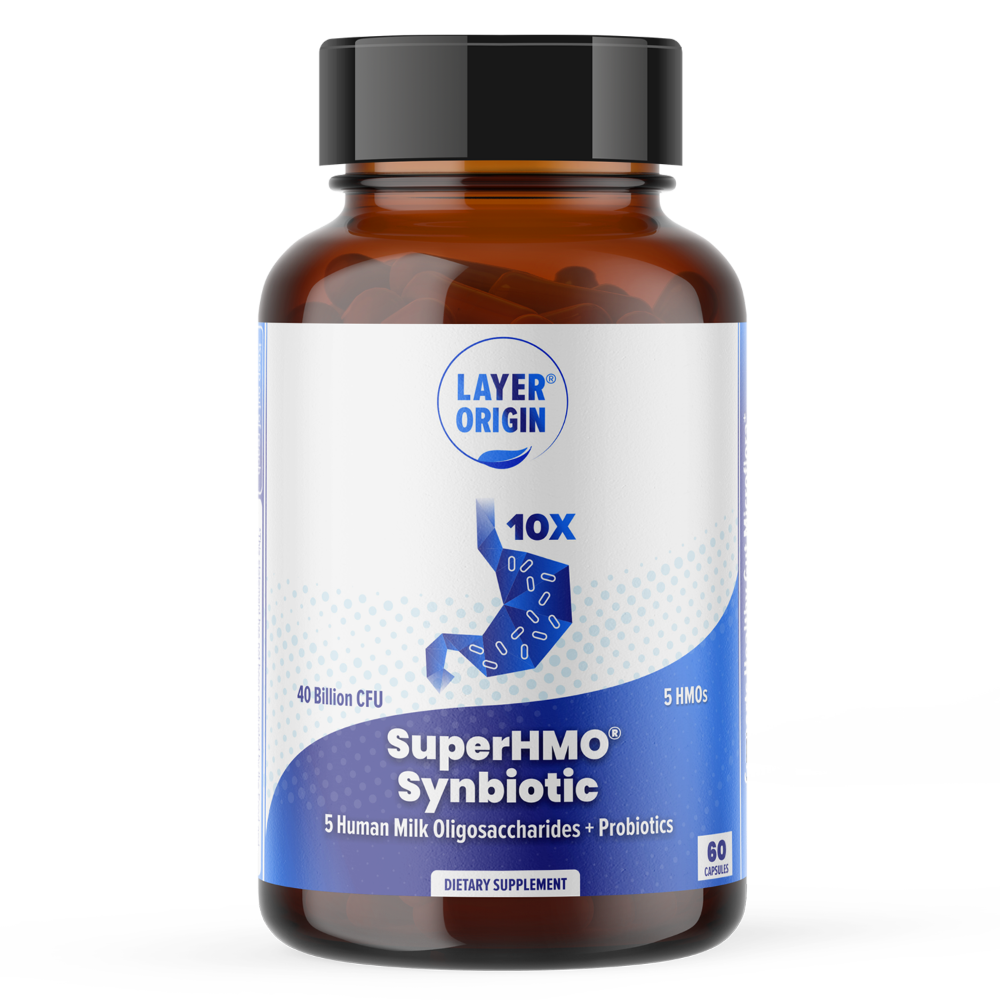
In this scenario, seeding the gut with HMO-responding Bifidobacteria strains first, like B. infantis, and then feeding with 2’-FL is encouraged. Studies have shown that combining strains like B. infantis with HMOs enhances the colonization of Bifidobacteria and their metabolite output. For example, De Bruyn and Co. found that combining B. logum subsp. Infantis LMG 11588 and an age-adapted six HMO blend resulted in increased SCFA production in participants with a low abundance of HMO-metabolizing bacteria [13].
This scenario is most often seen after antibiotic use, C-section delivery, or prolonged formula feeding with no HMO exposure. In these cases, 2’-FL has very little to work with, so it is important to seed with a synbiotic strain or an HMO responder that can utilise 2’-FL, such as B. infantis. Once this is established, HMOs, like 2’-FL, can support growth and drive microbiome shifts into a more positive and balanced direction.
Summary
Seeding the gut with HMO responders, such as Bifidobacteria, and then feeding them 2’-FL represents a precision-microbiome nutrition strategy. Evidence shows that 2’-FL is a highly selective prebiotic, but its effectiveness depends on the presence and abundance of Bifidobacteria in the gut. For individuals with optimal Bifidobacteria levels, 2’-FL will help to maintain them. For those with moderate levels, 2’-FL can boost them to more positive levels, while for those with deficient populations, the most effective route is to seed first, then feed.
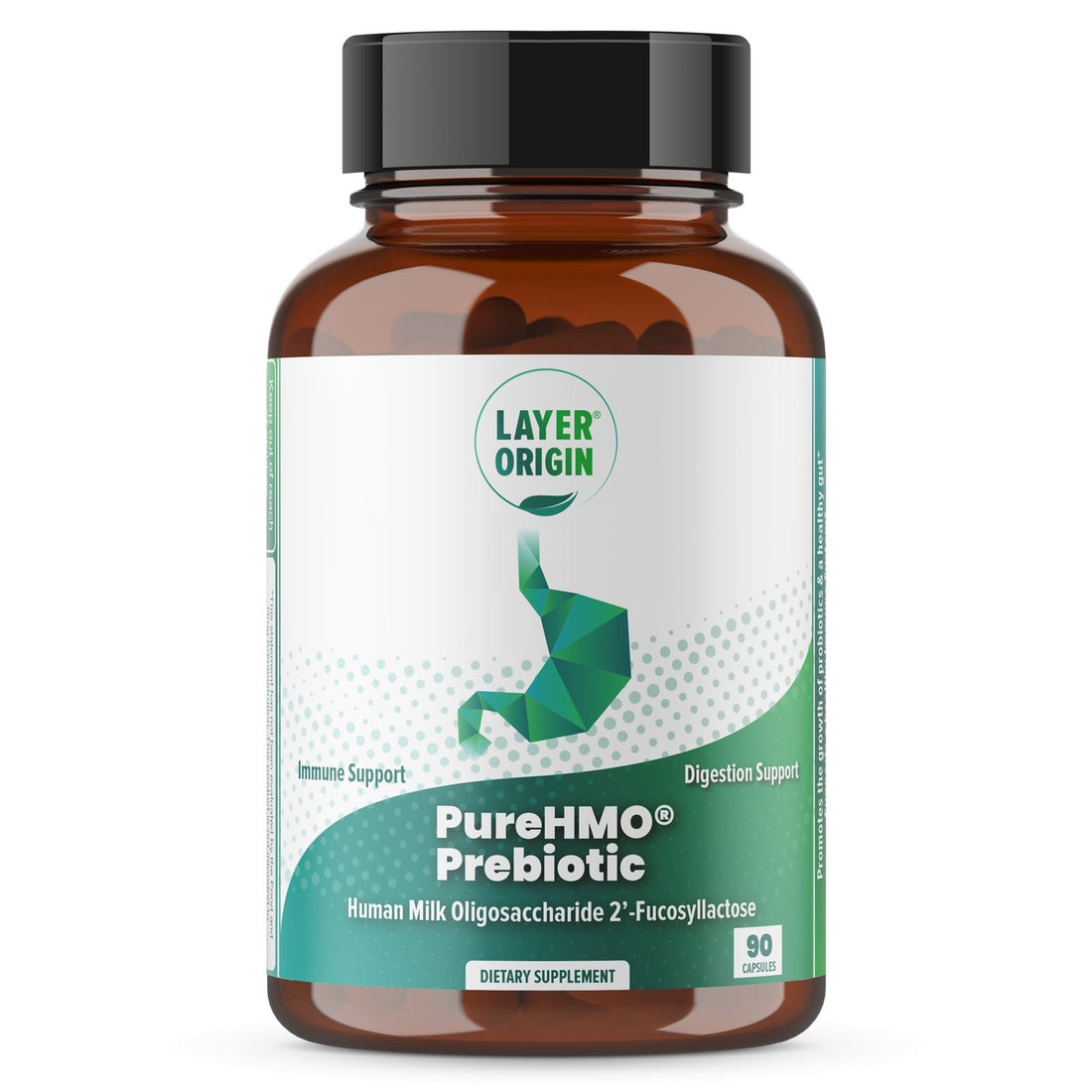
You can bolster the Bifidobacteria levels within your gut with our PureHMO® Human Milk Oligosaccharide Super Prebiotic Fiber.
Written by: Leanne Edermaniger M.Sc. Leanne is a professional science writer who specializes in human health and enjoys writing about all things related to the gut microbiome.