A new study shows 2′-FL, a unique prebiotic from human milk, can boost gut health, metabolism, and memory for healthy aging.
Content Outline
As we age, our bodies experience many subtle shifts in energy, metabolism, memory, and immune function. Much of this change begins in the gut, where the balance of beneficial microbes that once supported our health starts to fade.
Scientists have known for a while that the gut microbiome influences the aging process, but few interventions have successfully restored our youthful vitality. Now, new research has found that one important metabolite, the human milk oligosaccharide (HMO), 2’fucosyllactose (2’FL), may do just that.
A new randomized placebo-controlled trial, published earlier in 2025 in Cell Reports Medicine has demonstrated that this prebiotic molecule can positively alter the gut microbiome, metabolic hormones, and cognitive performance in older adults. The results are an important potential milestone in the science of healthy aging.
The study at a glance: 2’FL in older adults
The Rejuvenating the Aging Microbiota with Prebiotics (RAMP) study included 89 healthy men and women, with an average of 67 years. Over six weeks, participants were randomly assigned to one of 3 arms. They were:
-
A high-dose 2’FL arm where participants consumed 5g 2’FL per day – 29 people.
-
A low-dose 2’FL arm where participants consumed 1g 2’FL per day – 30 people.
-
A placebo arm where participants consumed a glucose product containing no 2’FL – 30 people.
During the study, researchers tracked a wide range of biomarkers, including gut bacteria, blood fats, hormones, and immune responses.
Although the study investigated how this HMO could act as an immune modulator and its impact on cytokine responses, the most interesting findings were elsewhere. For example, the high-dose 2’FL group demonstrated broad biological shifts within the gut, blood, and cognition.
Here is a summary of those findings:

-
Gut microbiome – The abundance of Bifidobacteria increased significantly following 2’FL supplementation.
-
Metabolic markers – Levels of high-density lipoprotein (HDL) or good cholesterol, fasting insulin, and the hormone FGF21 rose.
-
Cognitive performance – Participants whose microbiomes responded most strongly to 2’FL performed better on cognitive tests.
The importance of HMOs in infancy and beyond
The human gut microbiome changes with age, with beneficial species, such as Bifidobacteria, decreasing [1, 2], while pro-inflammatory or harmful bacteria rise. The shift is associated with changes in metabolism, inflammaging, and an increased risk of chronic diseases, like cardiovascular and neurodegenerative illnesses.
In infants, HMOs are an important prebiotic for kickstarting the development of the gut microbiota and the immune system. HMOs make up around 10% of the dry weight of human breast milk [3]. Previously, they were thought to just feed beneficial Bifidobacteria species [4], one of the early colonizers of the human gut, but more recent discoveries have found that they are so much more than just prebiotic food sources.
When it comes to research on the importance of HMOs, much of the current work has focused on the infant microbiome and immunity. A 2016 study found that babies fed a formula containing 2’FL had inflammatory cytokine levels similar to those of babies who were breastfed and 29 to 83% lower than those of infants fed a control formula that contained no 2’FL [5].
A further study published in 2023 found that supplementing infant formula milk with 2’FL supports the production of secondary immune metabolites similar to levels seen in exclusively breastfed infants. In other words, formula milk containing 2’FL could support normal immune function, further highlighting the importance of HMOs, particularly 2’FL, for the developing baby.
But what about at the other end of the age spectrum?
In 2023, Jackson and colleagues published the results of their 4-week study, which compared the effects of 2’FL and oligofructose, both individually and in combination. The researchers found that the combination had positive effects on the composition of the gut microbiomes of the healthy adults, including increases in:
-
Bifidobacterium
-
Bacteroides
The study also found that this prebiotic combination improved mood parameters of the participants [6].
Another recently published study found that combining 2’FL with Bifidobacterium infantis had a synbiotic effect on the adult gut microbiome, significantly increasing Bifidobacteria abundance and other commensal taxa, such as Lactobacillus, while reducing potentially pathogenic species. It also significantly increased short-chain fatty acids and suppressed the conversion of betaine to trimethylamine (TMA) [7]. TMA is oxidized to trimethylamine N-oxide or TMAO, which is implicated as a risk factor for heart disease, kidney disease, and other metabolic disorders.
What the new research says
The new study by Carter and Co provides further evidence that HMOs have benefits for older adults, especially for their cognitive health. Although the data showed that 2’FL supplementation did not affect the cytokine response—the main aim of the study—it did reveal other interesting results.
Effect of 2’FL on the gut microbiome
One of the key findings from the study was that the high dose 2’FL increased the abundance of Bifidobacteria, particularly in week 3 of the study, but returned to baseline levels during the washout period (as seen in Fig. 2).

Figure 2. Bifidobacteria abundance blooms, particularly at week 3 of the study, for both high and low-dose 2’FL groups, but following the washout period at week 10, these levels fall to near baseline.
However, it was noted that there was a high level of variability in the Bifidobacteria response, leading the researchers to group the participants into:
-
Responders – those whose Bifidobacterium levels were above the median change.
-
Non-responders – participants whose Bifidobacterium levels were below the median level.
At the start of the study, 93% of responders had Bifidobacterium in their microbiome compared to 58.6% of non-responders.
Responders experienced a clear bloom in these beneficial microbes following 2’FL supplementation, including in their plasma (Fig. 3), while non-responders had little change, suggesting that the starting composition of the microbiome may determine how well a person can benefit from HMOs, like 2’FL.

Figure 3. Plasma concentrations of 2’FL at week 6. Bifido responders had a significantly higher plasma concentration of 2’FL at week 6 of the intervention than non-responders.
But that’s not all, “responders” also experience metabolic and inflammatory changes, and perform better on visual memory tests.
Let’s take a closer look.
Metabolic, hormonal, and inflammatory benefits
Another surprising finding from the study was the change in lipids and circulating metabolic hormones. After 6 weeks, the high-dose 2’FL group had a 6% increase in HDL cholesterol, while fasting insulin levels increased on average by 23.6% in the high-dose group. Within the high-dose group, the levels of FGF21, a hormone that is secreted by the liver and involved in fat metabolism, increased significantly (Fig. 4). In previous studies,
FGF21 analogs have been linked to improved HDL cholesterol levels, similar to the results of this study, in obese people with type 2 diabetes [8]. Interestingly, after a month-long treatment with an FGF21 analog, improvements in body weight, LDL cholesterol, and triglycerides were also noted.

Figure 4. FGF21 expression across the 3 groups at baseline and weeks 3 and 6 of the intervention.
Although these results are modest, they are biologically meaningful, suggesting that 2’FL is far more than just a prebiotic and could have systemic benefits that influence metabolic ageing.
The effects of 2’FL supplementation on cognition
One of the key factors that can be affected as we age is our brain performance and cognitive abilities. It is estimated that 1 in 14 people over 65 is affected by dementia, rising to 1 in 6 for those over 80 [9]. It’s also a major concern for many people, with around 80% of the general population concerned about developing dementia, and 25% believe there’s nothing they can do to prevent it [10].
Perhaps the most promising finding from this study is the subtle improvement in cognitive performance among the Bifidobacteria responders. These participants performed better on a visual memory task at the end of the 6-week intervention.
Although this was not the main aim of the study, it aligns with previous evidence from animal and infant studies, which indicates that 2’FL supplementation affects cognition and memory. In a rat study, 2’FL supplementation led to rats performing significantly better on cognitive tests at 1 year [11]. In a human study, greater breastfeeding frequency at 1 month was associated with infant cognitive development, which may be attributed to greater exposure to 2’FL [12].
The results of the current study are exciting, and although more research is needed, they demonstrate the potential positive impact 2’FL could have on older adults’ cognition.
Why these findings matter
Healthy aging isn’t about prolonging your lifespan, it is also about preserving your quality of life, including energy, vitality, and mental clarity. What is clear is that the gut microbiome plays a central role in all of these factors, influencing your mood, metabolism, immunity, and even brain health.
▶ Learn more about the gut-brain axis.
This study is important because it demonstrates that the aging gut remains responsive and can adapt and flourish when it is provided with the right nutrients. In this case, the most abundant HMO in human breast milk, 2’FL [13].
By supplementing Bifido responders with a high 5g daily dose of 2’FL, their gut responded with a Bifidobacteria bloom, which, in turn, led to widespread changes in metabolic and immune markers and even improved cognitive ability.

The study also noted that once 2’FL supplementation was stopped, the microbiome benefits were reversed, suggesting that continuous intake may be necessary to continually yield benefits.
Although more research is needed to understand the long-term impact, the study highlights that supporting your gut health is key to aging well.
Support your gut, preserve your future
The science is clear, a healthy gut = healthy aging. Now, you can support your microbiome with the same ingredient studied in this clinical trial: 2’fucosyllactose (2FL).
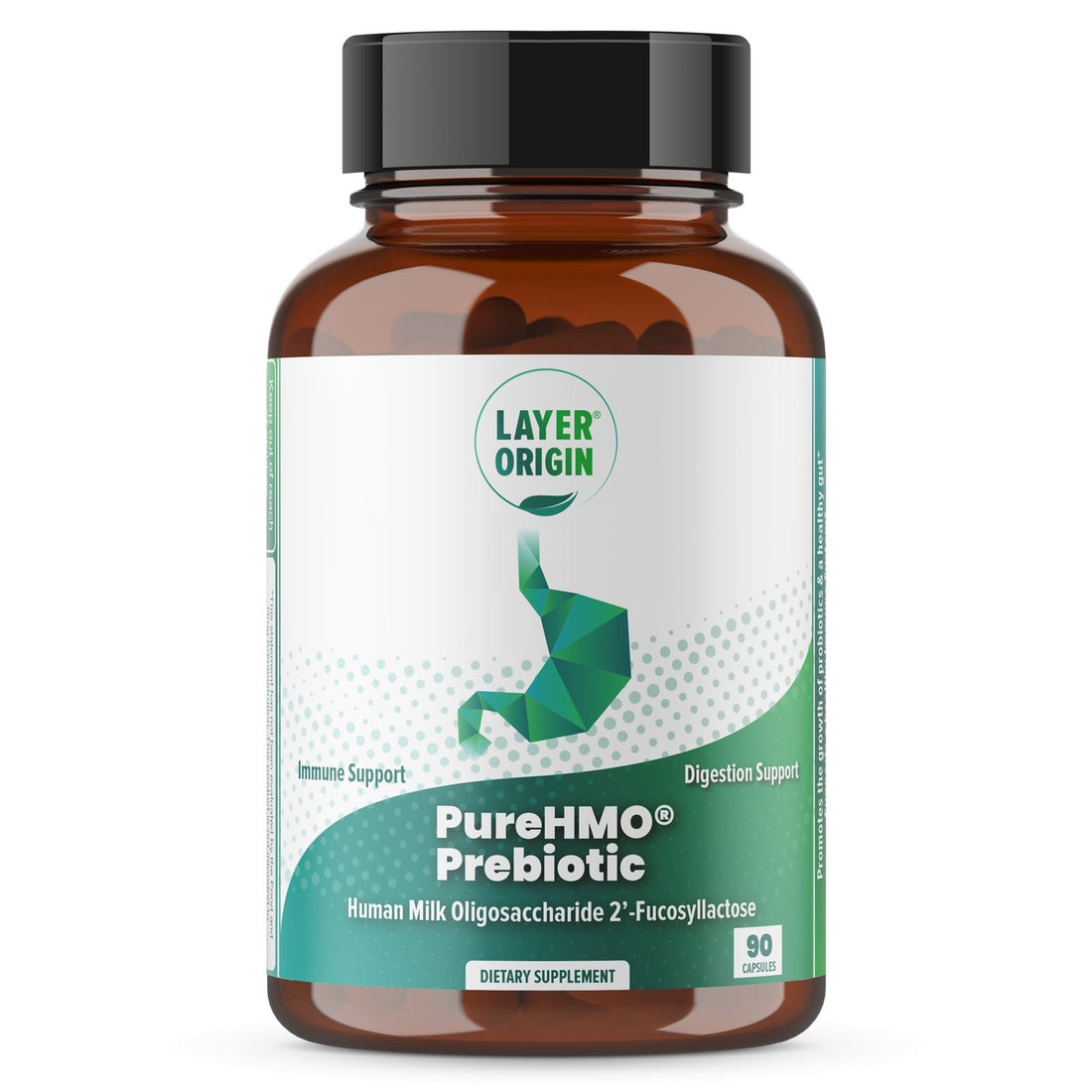
At Layer Origin, our 2’FL supplement, PureHMO Prebiotic Powder, delivers 1950 mg of 2’FL per serving, the same bioactive molecule shown to promote Bifidobacterium growth and support several key metabolic and cognitive markers of healthy aging.
Invest in your gut microbiome today.
Written by: Leanne Edermaniger, MSc. Leanne is a professional science writer who specializes in human health and enjoys writing about all things related to the gut microbiome.