Have you noticed that your belly is getting bigger? Has it got you wondering whether it’s bloating or belly fat? Your diet may be causing what’s making you self-conscious, but your gut microbiome could also be involved. Here, we uncover the science behind how gut health and visceral fat are interlinked.
Content outline
What is visceral fat, and why does it matter?
Visceral fat is body fat stored deep in your abdomen (stomach area) and can appear around organs such as your liver and intestines. It isn’t the same as the fat you can pinch just beneath your skin. Instead, the more visceral fat you have, the higher your risk of health issues, like type 2 diabetes and heart disease [1].

Figure 1: Visceral fat is found deep inside the abdominal and chest cavities, surrounding vital internal organs.
Your body needs some fat to function. Fat provides energy, helps build cells, cushions your organs, regulates your body temperature, and even absorbs vital nutrients [2]. However, fat becomes a concern when you have more visceral fat than is healthy. Unlike the number on the scale, your waist measurement can offer a crucial clue about how much fat you carry around your middle. Although it cannot tell you exactly how much of the fat around your waist is visceral, it can offer valuable insights into your health.
Is a flatter stomach the same as less visceral fat?
No. A flatter stomach isn’t the same as having less visceral fat, but they can be related. A flat stomach relates to how your abdomen appears from the outside and can depend on several factors, including how much subcutaneous fat (the fat you can pinch under your skin) you have, your muscle tone, posture, and whether you have any temporary digestive issues such as gas or bloating.
In other words, your stomach may look or feel flatter when gas, bloating, or constipation improves, but that doesn't change how much body fat is present.
Can your gut microbiome affect belly fat?
Absolutely! Research suggests your gut microbiome's composition can directly affect belly fat, including how much visceral fat is stored around your vital internal organs. One study by scientists at King’s College London concluded that gut microbiome composition and diversity can influence circulating levels of one particular short-chain fatty acid, acetate. Acetate is believed to reduce cardiometabolic disease risk and visceral fat development. The study identified 2 groups of bacteria with potentially positive and negative associations. They found that Coprococcus may benefit host health because of its ability to synthesize B vitamins and SCFAs, while Lachnoclostridium may negatively affect circulating acetate levels and could be involved in the production of harmful fatty compounds [3].
A more recent 2026 study demonstrated that visceral fat showed a more consistent and stronger association with the gut microbiota than body mass index (BMI), total fat, or waist circumference. This study also found that gut microbiome richness and diversity are linked to visceral fat levels, with reduced alpha diversity (species diversity within the gut) reflecting higher visceral fat levels. The researchers noted that the glycogen synthesis pathway was positively linked to increased presence of D. longicatena and Bifidobacterium adolescentis, which appear to promote visceral fat accumulation [4].
However, the link between visceral fat and B. adolescentis isn’t fully defined because other studies have found that B. adolescentis supplementation can reduce high-fat diet-induced visceral fat in animal models [5].
Another key bacterial species linked to lower visceral fat accumulation is Akkermansia muciniphila.
What does the research say about Akkermansia muciniphila?
Akkermansia muciniphila is a natural gut resident, but researchers have linked it to several areas of metabolic health. For example, higher abundance of A. muciniphila is associated with lower rates of obesity and better metabolic health, such as a lower risk of type 2 diabetes [6].
A study by Depommier et al. (2020) found that after 5 weeks, an A. muciniphila supplement reduced body weight gain and fat mass, and increased lean mass in mice fed a normal diet. In the same mice, visceral fat weight also clearly decreased after supplementation [7].
How does A. muciniphila help reduce fat and improve metabolic health?
Akkermansia is thought to improve metabolic health in several important ways. They are:
-
Strengthens the gut barrier. Unlike other good gut microbes, A. muciniphila feeds on the mucus lining your gut (hence the name muciniphila or mucin lover). In doing so, Akkermansia helps to strengthen the tight cell junctions, preventing toxins, bacteria, and undigested food from entering your circulation and causing inflammation [8].
-
Increases satiety hormones. The byproducts that A. muciniphila produces can stimulate your gut to release glucagon-like peptide-1 (GLP-1) and PYY, which improve your blood sugar levels and keep you feeling fuller for longer [9].
-
Modulates fat storage. Preclinical animal studies suggest that A. muciniphila changes fat storage [10] and reduces fat accumulation [11], but large-scale human trials are needed to confirm whether this happens in humans.
What are HMOs, and can they support adult gut health?
Human milk oligosaccharides (HMOs) are specialised carbohydrates that are found naturally in human milk. They help shape an infant’s developing gut microbiome by feeding some of the earliest colonizers, including Bifidobacteria. However, researchers are also studying them for their benefits in adults.
For example, a six-week study in 89 older adults tested the HMO 2′-fucosyllactose, often shortened to 2′-FL. The higher-dose group showed an increase in Bifidobacterium, although the study did not meet its main measure of improved immune response. It did not test whether 2′-FL reduced visceral fat [12].
In animal studies, mice fed a high-fat diet (HFD) alongside a 2’-Fucosyllactose (2’-FL) supplement reduced HFD-induced obesity and glucose intolerance. It also increased mucus production in the gut lining, which led to a significant increase in Akkermansia and Bacteroides. Although not specifically investigating visceral fat, the study demonstrates that 2’-FL can influence host metabolism through its effects on the mucosal lining and diversity of the microbiota, which in turn could prevent obesity, of which visceral fat is an important driver [13].
Do HMOs feed Akkermansia?
Yes, Akkermansia can use HMOs for growth. HMOs are an important food source for many beneficial gut bacteria, particularly Bifidobacteria, which can also support other gut microbes through cross-feeding and by producing important metabolites, including short-chain fatty acids. Yet research also shows that Akkermansia can use HMOs like 2’-FL and 3’-FL for growth [14].
What can you do to support gut health and reduce visceral fat?
If you’re looking to reduce visceral fat, start with your lifestyle and build habits you can easily repeat. For example, eating a variety of fiber-rich foods, building regular movement into your week, and allowing time for these changes to work are important.
Some of the things you can try include:
✅ Add plant foods to each meal, such as oats at breakfast, beans or wholegrains at lunch, and vegetables with dinner.
✅ Increase your fiber intake gradually to avoid embarrassing symptoms, such as bloating, gas, and smelly farts.
✅ Build movements you enjoy into your daily routine, like walking, cycling, swimming, and strength exercises to help with weight loss and reduce the accumulation of visceral fat.
✅ Look at long-term patterns, things like bloating can change how your stomach looks daily, while measuring your waist circumference may offer greater insights into visceral fat.
✅ Try our Akkermansia supplement that combines live and pasteurized A. muciniphila to help strengthen your gut barrier lining and take advantage of its metabolic benefits.
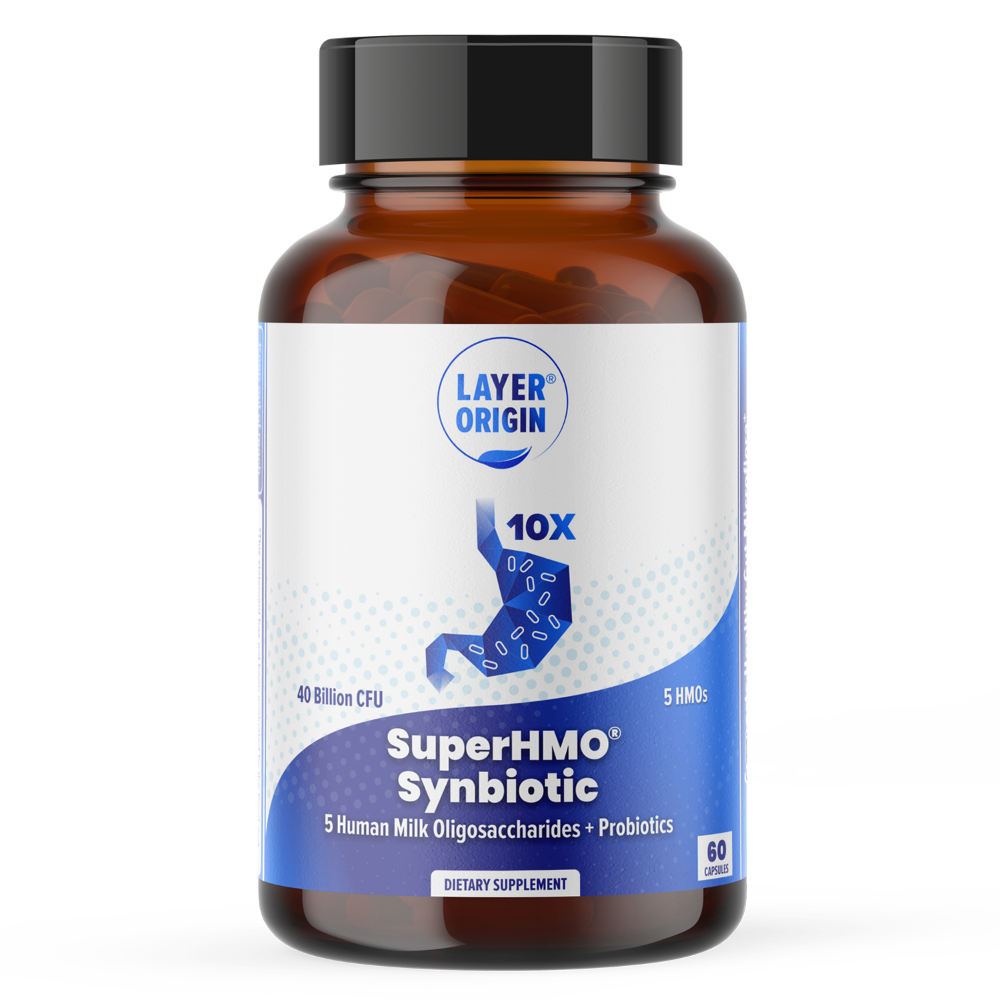
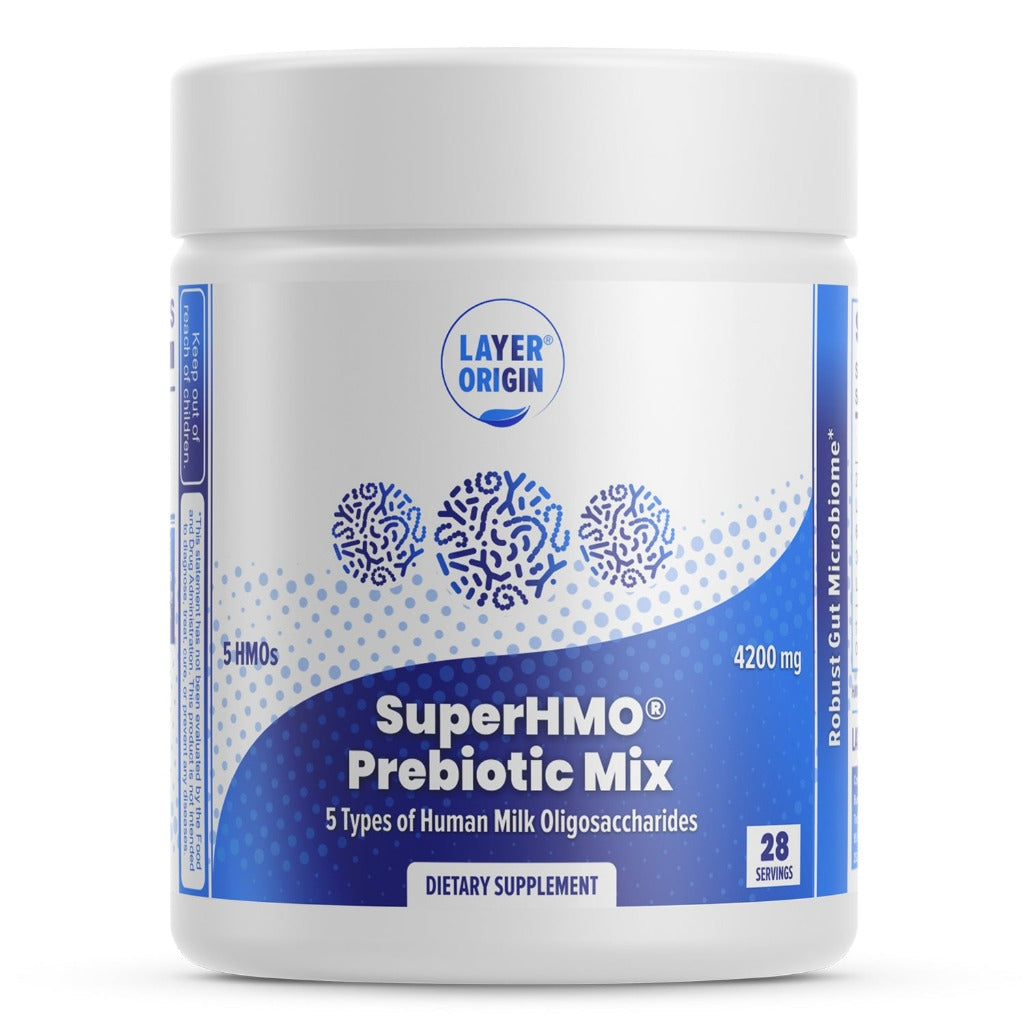
✅ Try our SuperHMO® Prebiotic mix, which contains 5 types of HMOs to help bolster your gut community and support your metabolic health.
Summary
Your gut microbiome plays a part in metabolic health, but reducing visceral fat takes more than changing your gut bacteria. A varied, fiber-rich diet and regular movement provide a strong foundation. Research into Akkermansia and HMOs is promising, although their effects on visceral fat remain uncertain.
To explore microbiome support alongside these habits, discover our SuperHMO range and Akkermansia products, or visit the Gut Health Knowledge Center. Focus on steady improvements in your health rather than promises of a flatter stomach.
Author details
Written by: Leanne Edermaniger, M.Sc. Leanne is a professional science writer who specializes in human health and enjoys writing about all things related to the gut microbiome. She has written extensively on inflammatory bowel disease, prebiotics, and microbiome research.
Her work focuses on translating complex medical science into evidence-based, practical health guidance.